That crystalline sake you’re about to pour this evening—its blueprint for perfection was conceived in medieval Nara, long before microscopes existed.
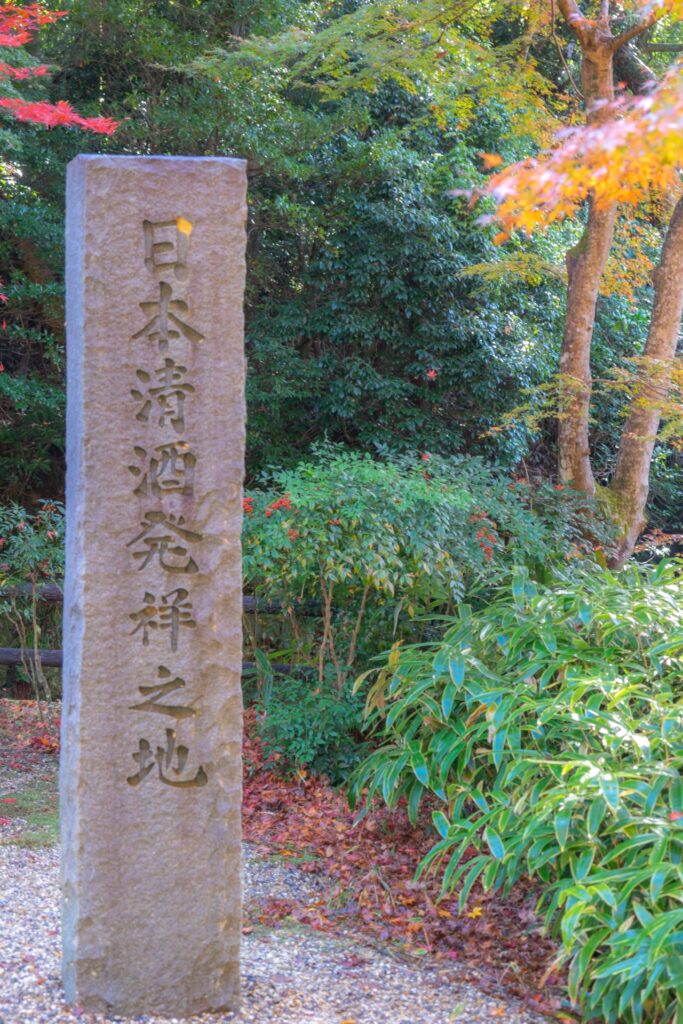
Deep in the mountains of Nara stands Shōryaku-ji Temple, where the monks undertook something far beyond mere brewing. This was an experiment of obsessive precision that would anticipate modern biotechnology by half a millennium.
How did Japanese monks master the manipulation of invisible microorganisms five centuries before Louis Pasteur discovered thermal sterilization? This transcends historical curiosity—it’s a Renaissance-era innovation story of transforming “corruptible water” into “divine nectar.”
Biohacking Without Microscopes: The Enigma of Bodaimoto
The ultimate enemy of sake brewing has always been spoilage. In an age devoid of refrigeration or antiseptics, brewing meant constant warfare against contamination.
Yet the monks of Shōryaku-ji pioneered bodaimoto—a revolutionary fermentation technique:
- Raw rice is deliberately soaked to induce lactic acid fermentation (creating an acidic environment hostile to spoilage bacteria)
- Within this protected microclimate, only yeast is cultivated
It was, in essence, a hybrid of probiotic fermentation and controlled alcoholic fermentation.With zero knowledge of microbiology, they engineered a flawless system to eliminate pathogenic organisms while nurturing beneficial ones.
Pure, organic biohacking. This innovation is why we can enjoy exquisite, safe sake today.
Transforming Liquid into Gemstone: The Birth of Morohaku
Sake of that era was characteristically cloudy, retaining the coarse flavors of unrefined rice. But their pursuit of excellence was relentless.
“Something more transparent, more sublime.”
They developed morohaku—employing polished white rice for both kōji (koji rice) and kake-mai (steamed rice added to the mash). While using white rice is standard practice now, in an age of primitive milling technology, this represented an extravagantly inefficient, almost irrational commitment to quality.
The result? Sake of pristine, jewel-like clarity—seishu (refined sake), shattering all previous conceptions of what the beverage could be. This became the foundation of modern premium sake.
Rewriting World History: Hi-ire—Surpassing Pasteur
The most astonishing technique: hi-ire (thermal pasteurization).
To enhance preservation, sake is heated to 60-65°C for sterilization. According to conventional history, Louis Pasteur discovered this principle—pasteurization—in 19th-century France.
But consider this: Nara’s monks had already mastered and implemented this technology five hundred years earlier.
Without thermometers, how did they discern precisely 65°C? According to historical accounts, they employed sensory calibration—”adding cold water to boiling water until the temperature became just hot enough to be bearable to the touch”—achieving rigorous thermal control through bodily intuition alone.
Centuries before a French scientist arrived at this breakthrough in a laboratory, Japanese monks transcended the boundaries of empirical science through field-tested wisdom.
Five Centuries of Romance in Your Glass Tonight
• Bodaimoto—conquering contamination
• Morohaku—achieving transcendent clarity
• Hi-ire—preserving perfection across time
Every one of these techniques originated at Shōryaku-ji Temple in Nara. Though nearly lost to history, bodaimoto was miraculously revived in 1996 through the passionate dedication of local sake artisans.
The profound, layered umami it produces—so complex that even modern technology struggles to replicate it—embodies the obsessive devotion of monks from five centuries past.
If you consider yourself a connoisseur of sake, experiencing a bodaimoto brew is essential. The moment you raise that glass, you’ll be drinking history itself.

Comments